Practice & place
When yoga comes with you.
Yoga retreat or practice-led journey? Here is how to understand which experience is right for you.
Two different needs
Not every trip that includes a yoga class is a yoga retreat. And not every yoga retreat is designed for people who also want to travel.
Sometimes you want to step away from everyday life, stay in one place and allow yoga to become the centre of your days. At other times, you want to continue practising while discovering somewhere new—without having to choose between the two.
Both can be meaningful experiences. They simply answer different needs. That is where the distinction between a yoga retreat and a yoga journey begins.
What is a yoga retreat?
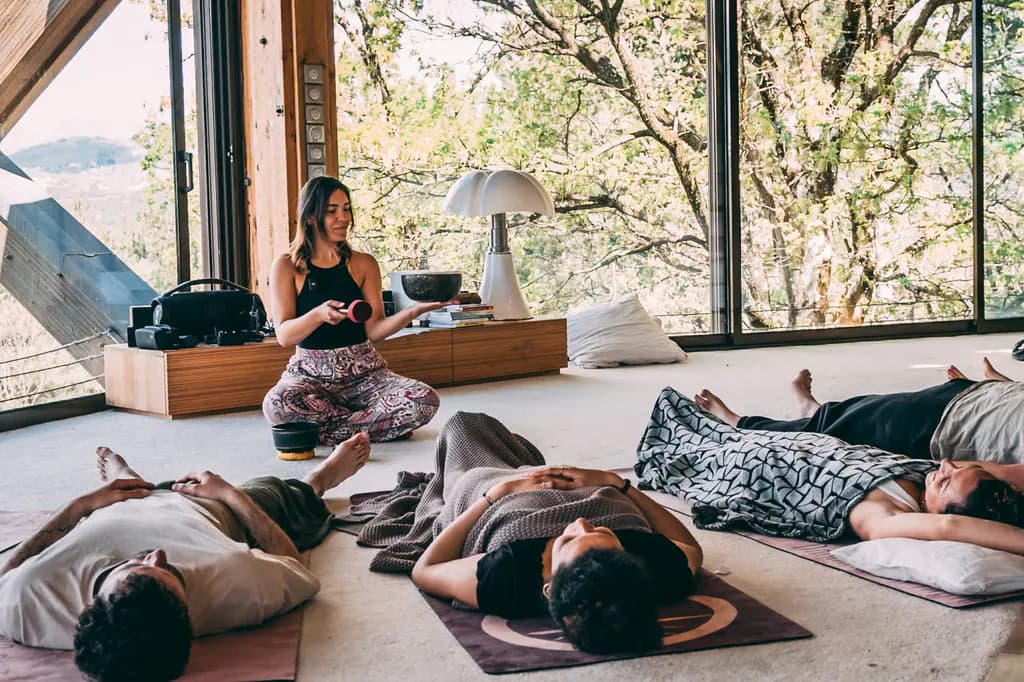
A yoga retreat is an opportunity to dedicate a concentrated period of time primarily—or sometimes entirely—to the practice.
Retreats are often held in quiet or isolated locations, away from the distractions and routines of everyday life. The daily programme may include several yoga sessions, meditation, pranayama, workshops, shared meals and time for rest or reflection. Exploration of the destination is usually secondary.
This is precisely what makes a retreat so valuable when it is what you are looking for. For that period, yoga is not one part of the experience. It is the experience.
A retreat may be less suitable for someone travelling with a partner, friend or family member who does not practise. That does not make the format restrictive; it simply works best when everyone understands that practice is the principal reason for being there.
- You want to concentrate almost entirely on your practice.
- You would like to study with a particular teacher.
- You are looking for quiet, isolation or introspection.
- You prefer to remain mainly in one location.
- Discovering the wider destination is not your priority.
What is a yoga journey?
A yoga journey is a real journey in which yoga continues to hold a meaningful and protected place.
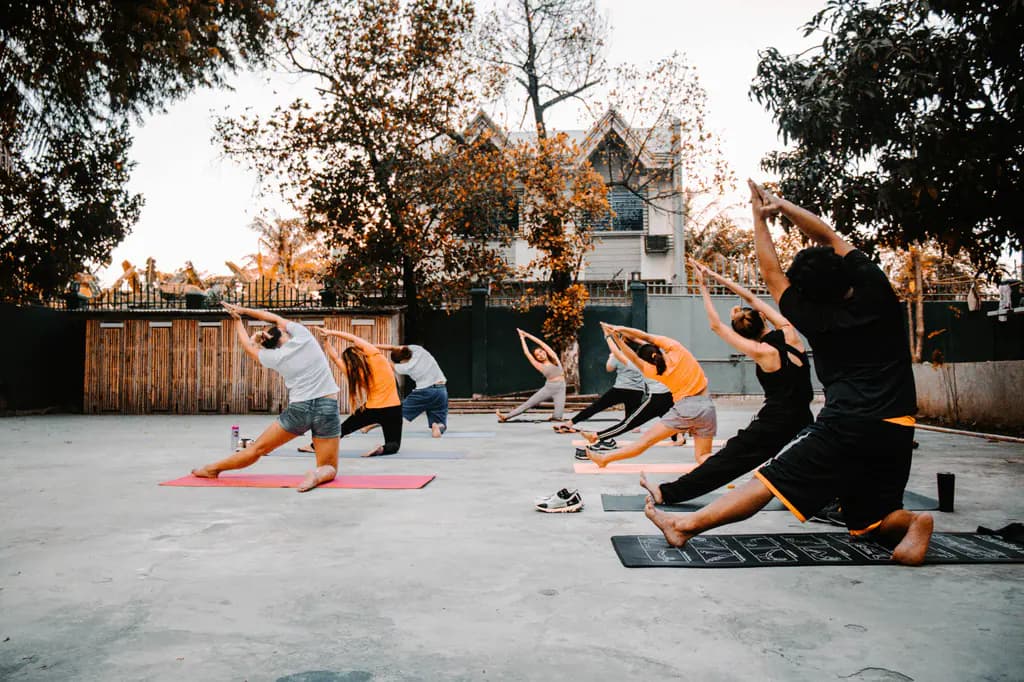
You explore the destination, experience its culture, meet people, eat, walk and spend your days discovering somewhere new. But you do not have to leave your practice at home in order to do it.
For people with an established regular practice, maintaining that rhythm on holiday can be surprisingly difficult: the hotel room is too small, the schedule begins too early or there is nowhere appropriate to practise. Eventually the practice disappears—not because it matters less, but because the journey was never designed to make space for it.
The Practice Society was created to offer another possibility. Time for practice is built into the structure from the beginning. The practice matters. So does the journey. They move together, like two parallel tracks.
What does a yoga journey look like?
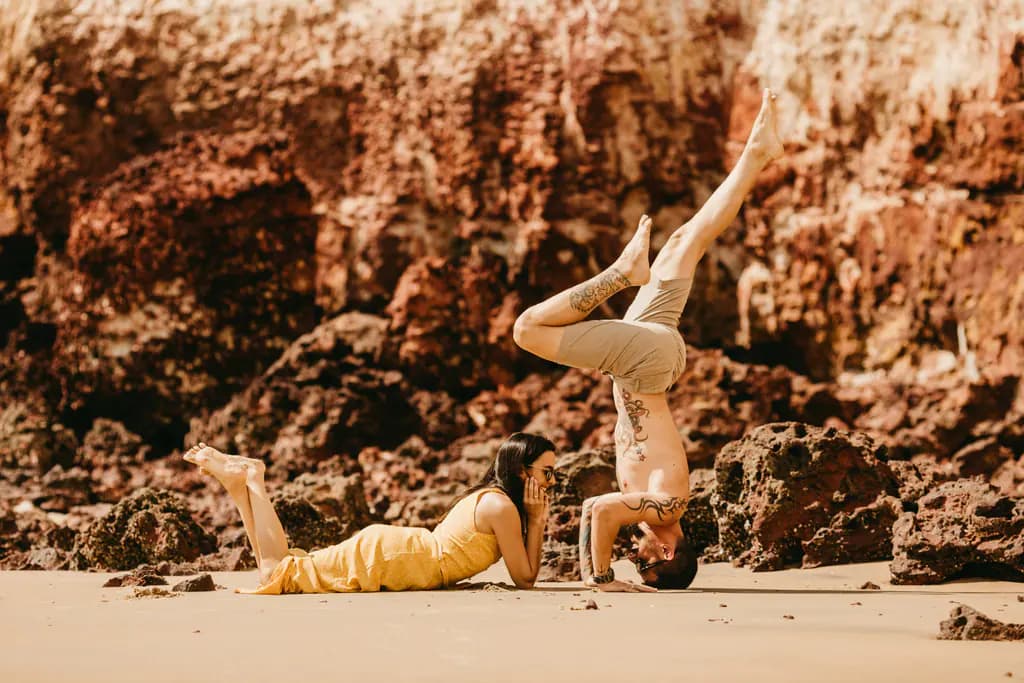
Every departure is different, but a yoga journey normally dedicates a defined part of the day to practice—often around two hours in the morning, before exploration begins. The rhythm depends on the teacher, destination and itinerary.
There may also be optional workshops or additional sessions. These complement the journey without turning the programme into an intensive retreat. The rest of the day belongs to the destination.
In Budapest, for example, the group practises together in the morning. Afterwards, the day continues through neighbourhoods, thermal baths, food, history and life beside the Danube.
A yoga journey can stay in one hotel or move through several places. Suitable shalas, realistic travel times and a flowing schedule are part of the design—not an afterthought.
Yoga is not the side activity
Some holidays include a yoga class. That can be enjoyable, but it is not the same as a yoga journey.
Here, the teacher accompanies the group and guides a practice that develops across the journey. The group shares both sides of the experience: practising together and discovering the destination together.
At the same time, the place is not merely a beautiful backdrop for yoga. A yoga journey works only when both elements are treated seriously.
Can a non-practising partner come?
Yes—and this is one of the most meaningful differences between the two formats.
Because practice occupies a defined part of the day, a partner or friend who does not practise can enjoy a slow morning and then join the wider journey. The practitioner does not have to abandon an important part of life; the companion does not have to spend an entire holiday following a yoga-only programme.
They can share the journey without pretending to want exactly the same experience from every hour of it. Individual departures will always explain clearly whether sessions are included, optional or reserved for registered practitioners.
What do retreats and yoga journeys have in common?
Both are guided by a teacher. Both protect meaningful time for practice. Both create a shared experience around a group that has chosen to be there.
The difference is not the quality or seriousness of the yoga. It is the balance between immersion in the practice and exploration of the place.
Which one is right for you?
Choose a retreat when yoga should be the principal purpose of your time away: immersion, concentration, introspection and days mainly organised around practice.
Choose a yoga journey when you want to maintain or deepen your practice while also exploring the destination properly—especially if you are travelling with someone who may not practise.
Neither answer is more evolved, adventurous or authentic. Sometimes what you need is to stop. Sometimes you want to keep moving without leaving an important part of yourself behind.
The Practice Society
The Practice Society creates small-group journeys built equally around a meaningful practice and the experience of a place.
Every departure is led by a teacher, coach or facilitator. The practice has a clear purpose, a dedicated rhythm and a real place within the journey. The destination is explored with the same level of care.
Yoga is one of the practices these journeys can be built around, but the idea reaches further: meditation, coaching, movement, creativity or another practice capable of bringing a community together.
The practice is not an accessory. The place is not a backdrop. You should not have to leave either one behind.